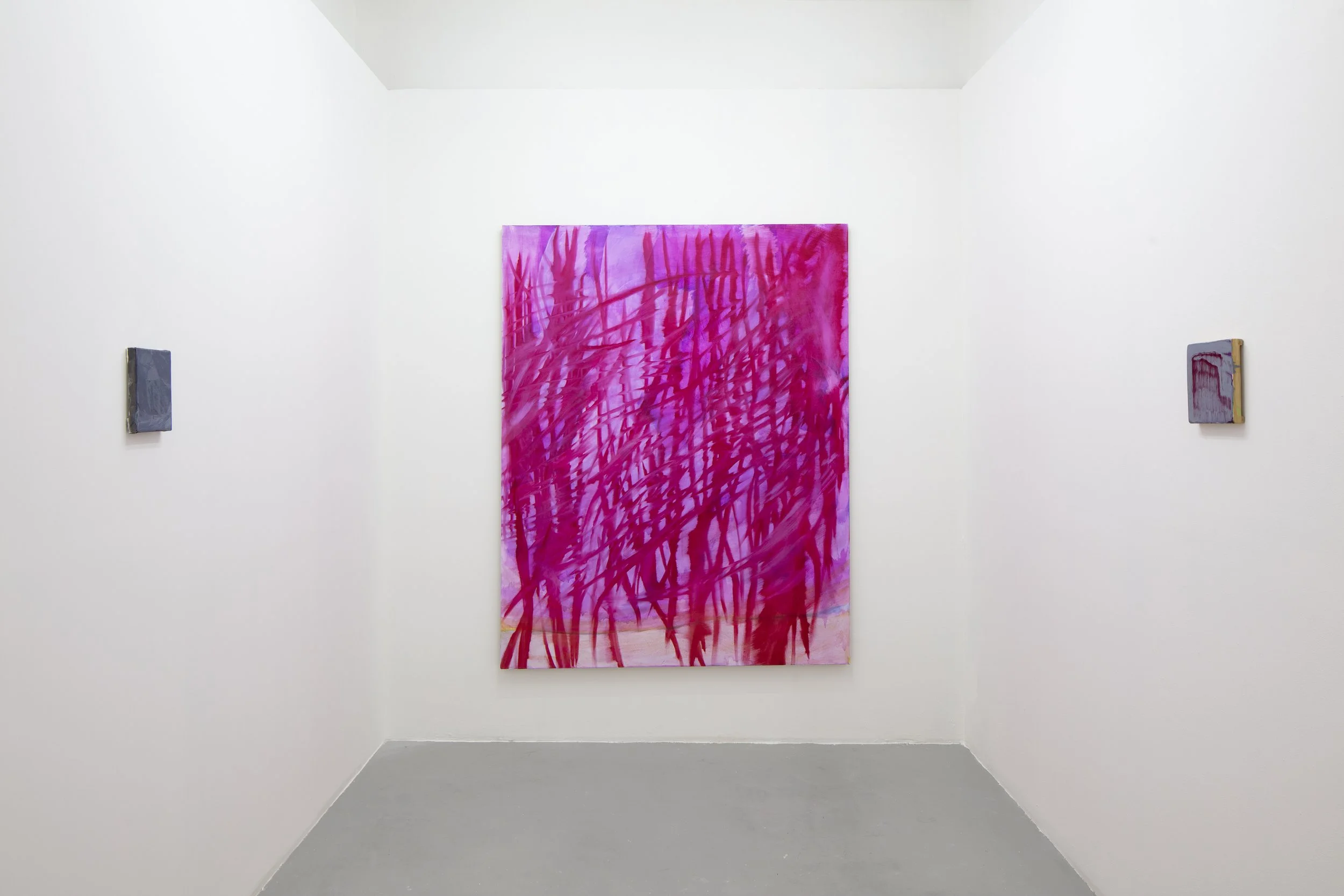
Calix ex Calore
Galerie Karen Huber
Mexico City, 2023
Exhibition text by Isabel Abascal
Ten stories for Augusta Lardy
Calix ex Calore
The paintings looked at one another. Candid portraits of a cursed geological era. “It started with a fire and ended with a storm,” said the painter. I understood perfectly what she meant. To nights illuminated by flames harvested by men, to faces crumbled by the terror of the end, and to a river of paint that carries sediments of hope.
Le feu s’allonge...
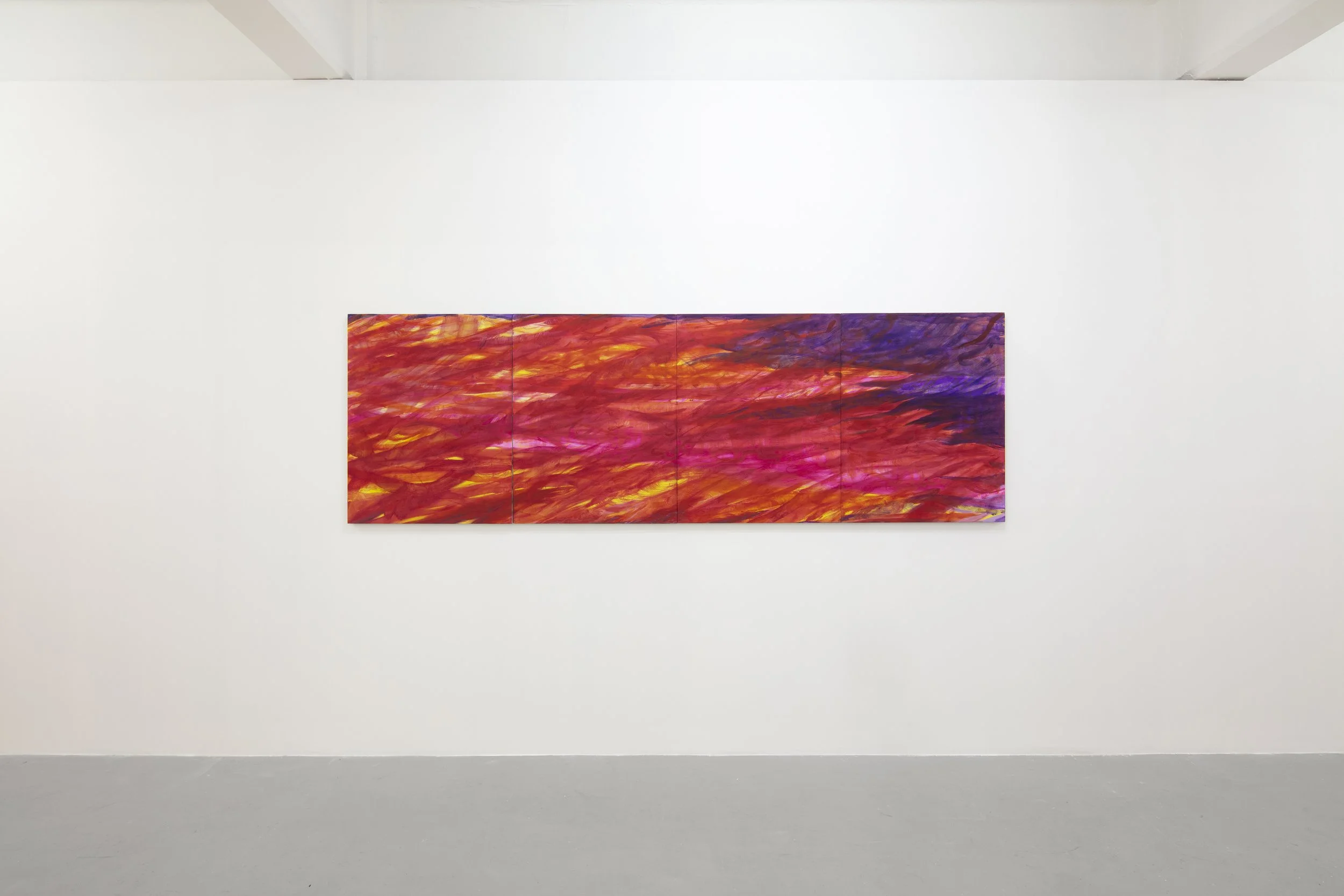
The fire brought us messages from distant lands. They were bad news. The land was burning on the shores of a lake in Switzerland with colours never seen before. A heatwave tinted the nights purple and coral. Looking at the horizon meant guessing scarlets and rubies, safrons and cadmium yellows, like tatters of fabric caught in a macabre dance. Not a single tree remained that hadn’t been reduced to ashes. Lamartine, the poet, howled, “Quoi? passés pour jamais? quoi! tout entiers perdus?”. The answer echoed off the walls of every house. We saw a deep red dawn rising and understood that the flames were already here, in the City, they had crossed the ocean.
Mûres et cataclysmes divers
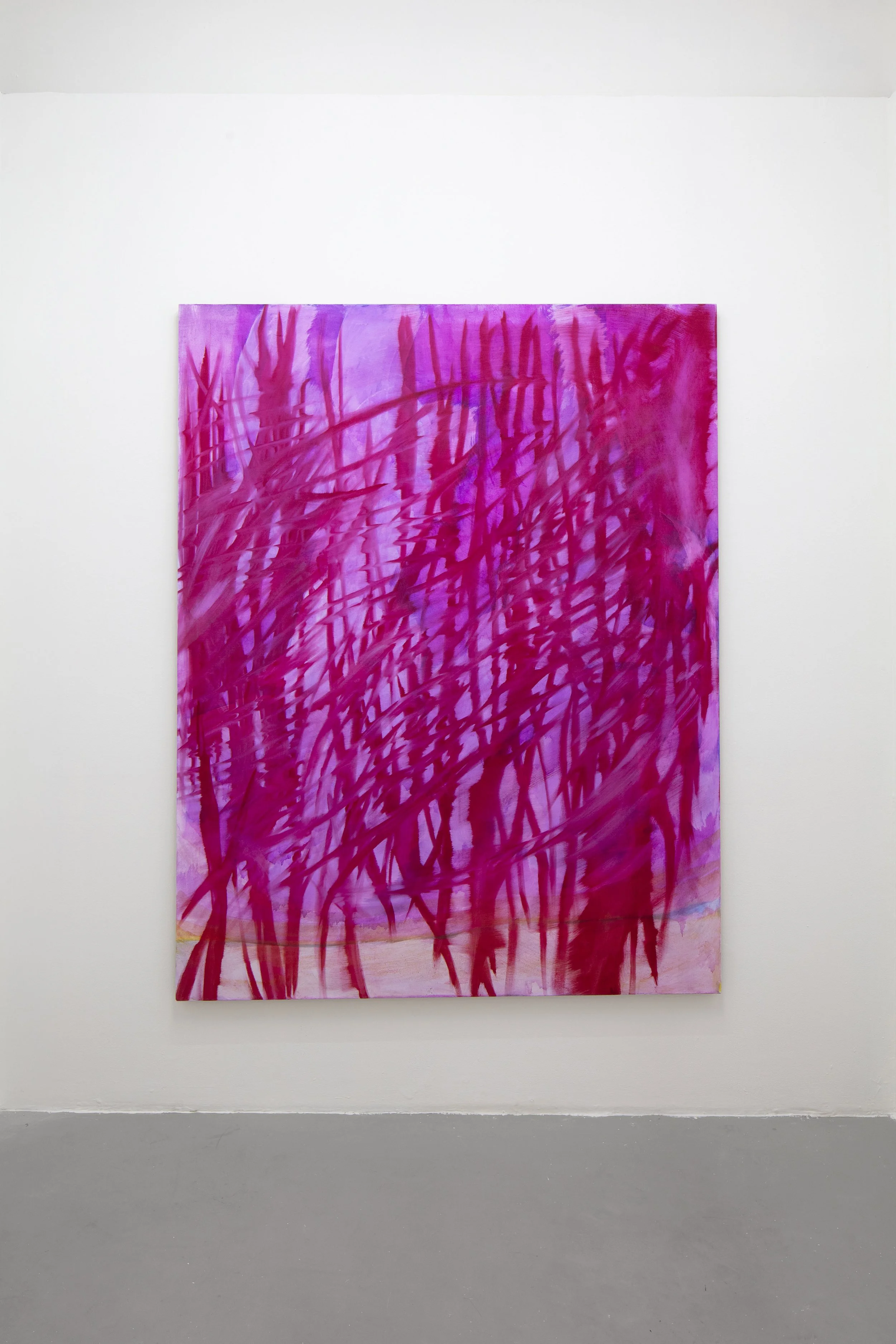
Her heart was a prodigious jewel, a calm sea with the scent of lilacs. As the years passed, she began to understand that she was in danger, that we all were. She surrounded herself with beautifully deadly thorns and spears. Each morning she drew a calligraphy more intricate than the previous day’s, with strokes as bright as fuchsia flowers. She wielded the pen, the brush, and the paintbrush as a defensive act. Around her, a frontier of words emerged in an enigmatic language that no one understood, because the time for talking had already passed.
Regarde! Je viens m’assoir seul sur cette Pierre. Erratic blocks
and waterfall
Upon opening her eyes, she experienced an endless sensation of falling into the void. A cold, thick, and rosy sweat slid down her forehead. She noticed she was tightly gripping something in her left hand. It was a small, half-crumpled and damp black-and-white photo. The image, marked by white wrinkles, was very old and showed the famous Reichenbach Falls in the Alps. A place that no longer existed. There, she had spent the happiest summers of her childhood, during those times when paradises swung eternally outside of time. Since then, several decades had evaporated like damp vapours. When she looked out of the window, the waterfall she observed was different. An antithetical landscape, a liquid curtain that roared and boiled as if, instead of falling to the ground, it was moving away from it. The magenta waters leapt both inside and outside her body. They scrutinised the world with ghostly faces, probing within her for any inconsistency. The orange rocks blended with thepores of her own skin. She felt the urge to jump.
Vous reprendez bien encore un morceau de montagne?
The tip of the knife must probe before sinking into the mountain. Not all points are good for cutting. Too hard and the blade will break with a metallic snap. Too soft and the slope will begin to crumble. Dismembering is not an easy task, those who know what they’re doing are cautious. When done properly, barely a trickle of blood splashes the canvas. Slowly, slowly to obtain a juicy slice.
Glacier asséché
All that remains from the sea are hollow shells and bleached corals. From the jungles, dry roots and uninhabited caves. The ancient lakes look like empty voids of eyes that don’tsee. Few remember what rain was like, and although stories circulate about the days when more than half of the world was covered in water, no one smiles upon hearingthem anymore. The alarm should have gone off with the first glacier that began to melt, but no one took it seriously. That glacier was small and blue, shy ice and silent snow. It evaporated, losing its colour, and left behind a trail of rocks of different sizes. Many artists came to see it immortalising its appearance. Oh, if only we had known how to decipher it!
La source, brûlante
I was called to investigate the mystery of a flower that burns but does not consume itself. Floating in the center of a crystalline water fountain, the small flames seem to belong to a common bonfire. But its petals crackle arrhythmically, giving off a scent of rose and jasmine. It’s a penetrating smell, like an image that cannot be forgotten. That’s why it’s called the flower that burns or the burning fountain. Many people avoid it, walking one road down or one road up, because they don’t trust the mystery. Others, who arrive battered and overwhelmed, understand that the flower is their only chance of salvation. They gaze at it spellbound for long hours, and the colours of its petals, the garnet, the pink, embrace them and begin to heal their wounds with oily brushstrokes.
Anti-diluvianism
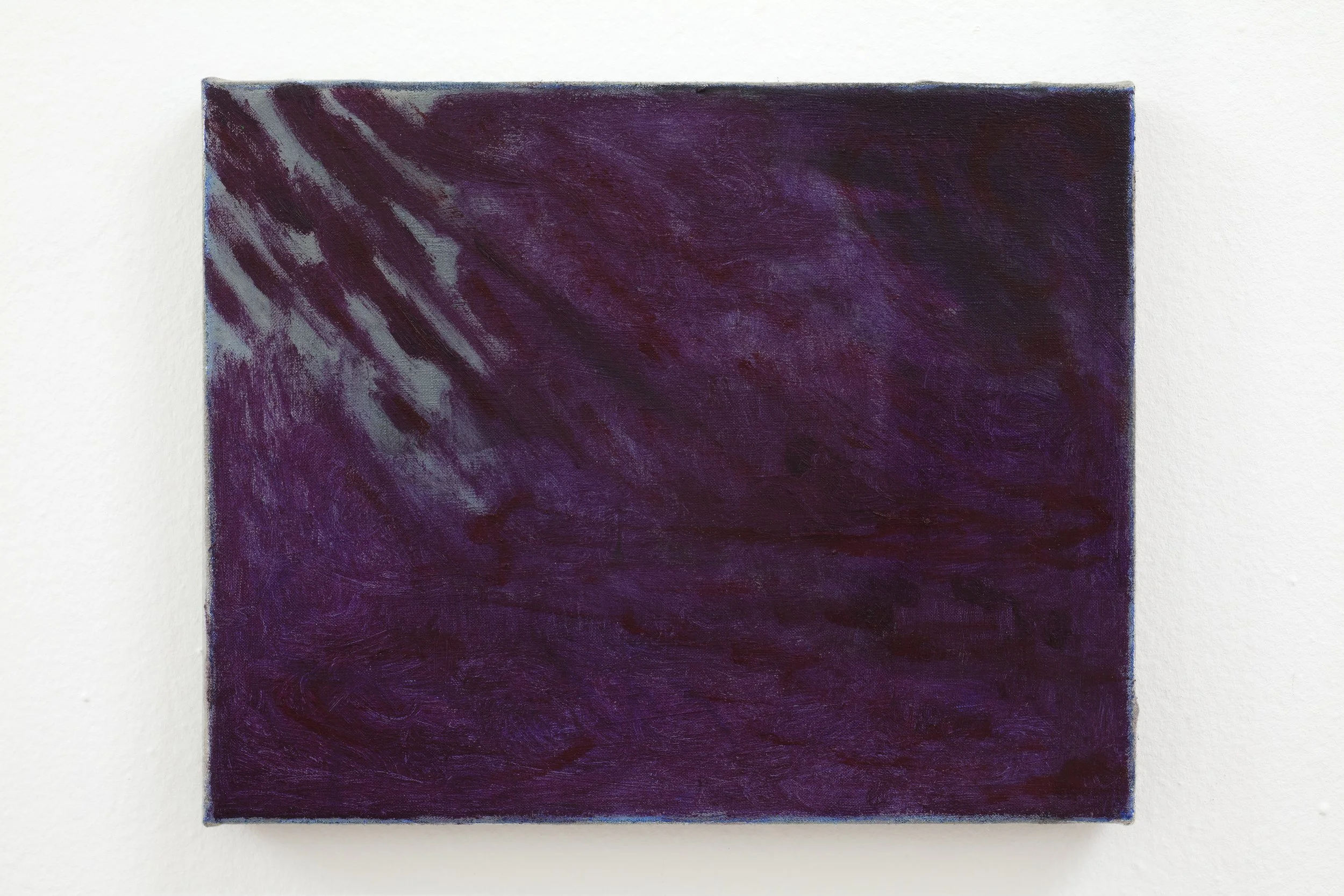
The sky was radiant, but she insisted that a storm was coming. “Where is it coming from?” we would ask her. “From behind my eyelids.” To reassure her, we would say, “When it arrives, we will deal with it.” “It will be unstoppable,” she would reply. She would become very still, barely moving her eyeballs against her closed eyelids, up and down, left and right, as if searching for something. One day when I closed my eyes, I also saw it, a small storm, violet and crimson. It seemed so real that it even splashed my face.
Tempêtes chaudes
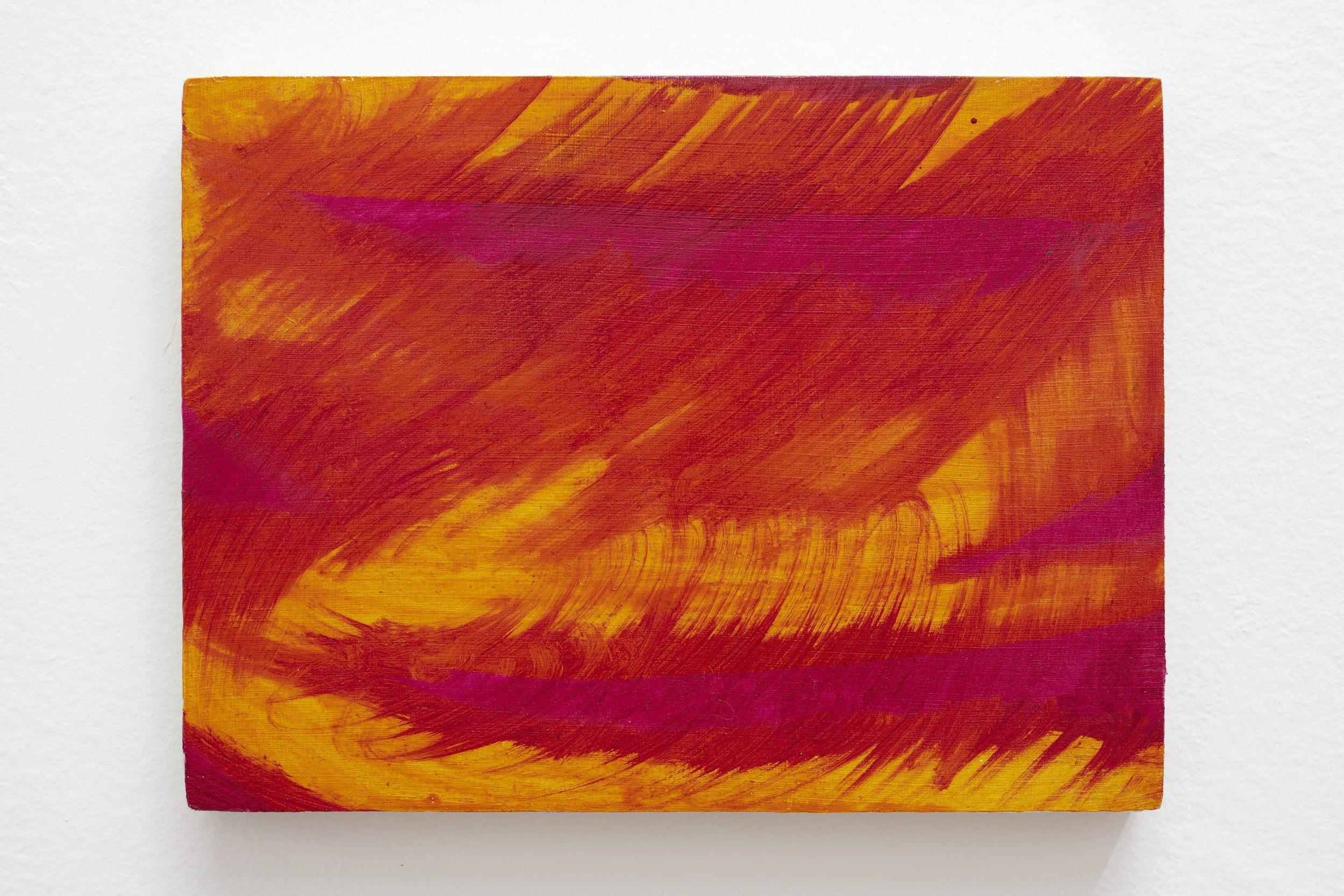
She paints as was done a hundred, two hundred years ago. She wants to conjure the future and make history walk backwards, cooling the world. The pigments gracefully fly under her command, combining, kissing, overlapping. She paints everything that happens, the thawing, the tides, the stormsand tempests, but above all, she paints fire. She paints blushing effigies to the flames so that, when the day comes, they will respect her paintings and not consume them.
During the month of August 2023,—while heatwaves were occurring on land and scientists were warning us of other heat waves, the ones ravaging the ocean—I met Augusta. Lardy. From her studio in London, the Swiss painter began to tell me a story filled with chromatic storms and floods of watercolour and oil. Augusta had created a chalice made of ink and canvas, which seemed to contain all the excess heat of the world. Her descriptions of this fantastical place were so brave, so detailed and poetic, that I began to think there was nothing more I could say about her artworks. This collection of texts are the chronicles of someone who was there, within each of the paintings of this exhibition but did not fully understand what was happening. They refer to the “Tales of the Struggle in Northern Mexico” that Nellie Campobello compiled in her book “Cartucho” nearly a hundred years ago, and which speak of a battle, perhaps bloodier but no more virulent than the one we are living through these days against global warming. Finally, these narratives are invitations to experience Augusta Lardy’s paintings for oneself, to feel their temperature, their energy, and their presence.
Isabel Abascal